Tea Culture and Tea Houses in Shanghai

HopeGoo Travel Adviser
Last Updated: 2026-08-11 13:55:28
Shanghai’s tea culture combines traditional Jiangnan customs with the city’s commercial and international character. Visitors can experience tea in historic buildings, traditional-style tea houses, modern tea lounges and specialist tea shops.
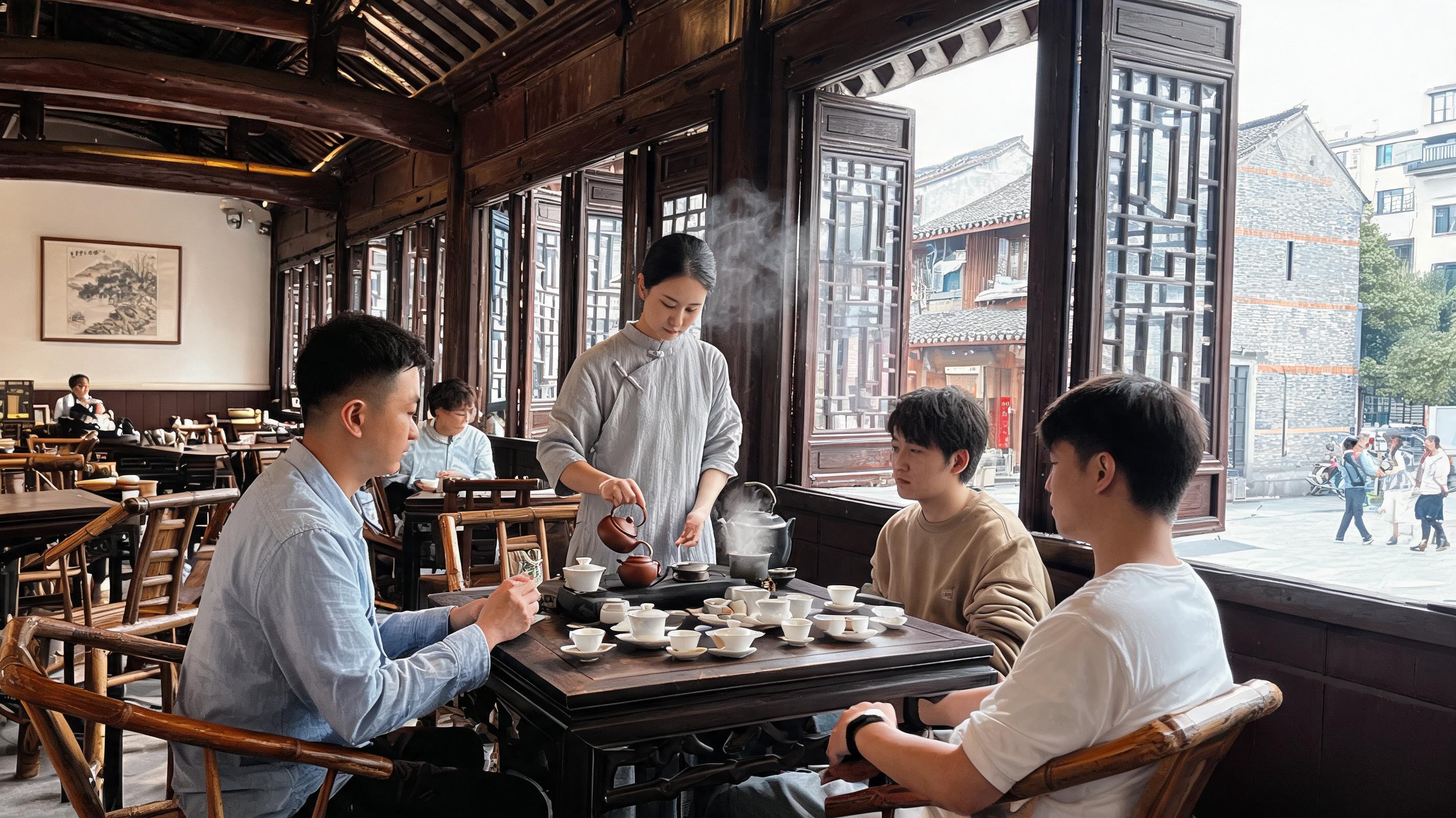
A tea-house visit can be a simple break during sightseeing or a structured tasting that introduces tea leaves, brewing methods, teaware and basic etiquette.
Understanding Shanghai Tea Culture
Tea houses have long served as social spaces in Shanghai. Historically, people visited them not only to drink tea but also to meet friends, discuss business, listen to music and observe public life.
During the nineteenth and early twentieth centuries, Shanghai’s tea houses reflected the city’s changing urban culture. Traditional Chinese tea drinking developed alongside new forms of entertainment, commerce and hospitality.
Modern Shanghai continues this tradition in several ways:
- Historic tea houses in the Old City
- Traditional tea-service venues
- Specialist tea shops offering tastings
- Contemporary tea lounges with cafe-style service
- Cultural programs involving tea, music or calligraphy
Individual venues change frequently, so check current opening hours, menus and reservation requirements before making a special journey.
Traditional Tea Houses in Shanghai
Huxinting Teahouse
Huxinting Teahouse is one of Shanghai’s most recognizable traditional tea houses. It stands in the pond outside Yu Garden and is reached by a zigzag bridge.
The building and its setting provide a strong heritage atmosphere, but the surrounding area can become very crowded. Prices, seating arrangements, performances and operating hours should be checked before visiting.
Tea Houses Around Yu Garden
The Yu Garden and Old City area contains tea shops and traditional-style tea houses aimed at both residents and visitors.
Quality and prices vary considerably. Check the menu before ordering and confirm whether tea is charged by person, pot, tea type or service package.
Neighborhood Tea Rooms
Smaller tea rooms can be found in areas such as Jing’an, Xuhui and Huangpu. These venues may offer a quieter experience than the major tourist districts.
English-language service is not guaranteed, and some venues operate mainly through advance reservations.
Modern Tea Lounges
Contemporary tea spaces often combine traditional brewing with minimalist interiors, individual tea sets, desserts and more flexible seating.
They are suitable for visitors who want to explore Chinese tea without attending a formal ceremony.
Popular Chinese Teas to Try
Chinese tea is commonly divided into green, white, yellow, oolong, black and dark tea. Shanghai tea houses may serve varieties from different regions of China rather than only locally produced teas.
| Tea Type | Typical Character | Suitable For |
|---|---|---|
| Green tea | Fresh, light and vegetal | First-time tea drinkers |
| Jasmine tea | Floral and fragrant | Visitors who prefer an aromatic tea |
| Oolong tea | Floral, roasted or layered | Structured tastings and multiple infusions |
| Black tea | Rich, smooth and sometimes malty | Visitors familiar with stronger tea |
| White tea | Soft and delicate | Slow, lighter tastings |
| Pu-erh tea | Earthy and complex | Experienced tea drinkers |
Longjing green tea is associated with nearby Hangzhou and is commonly available in Shanghai. Its quality, harvest season and price vary significantly, so ask for clear product information before purchasing expensive leaves.
What to Expect During a Tea Ceremony
A tea ceremony or guided tasting usually focuses on the tea leaves, water, brewing time and teaware. The exact process depends on the tea type and the style used by the host.
A typical session may include:
- Introducing the tea and teaware
- Warming the cups and brewing vessel
- Adding and briefly rinsing the leaves where appropriate
- Preparing the first infusion
- Serving several short infusions
- Comparing changes in aroma and flavor
Not every Shanghai tea house offers a formal ceremony. Some venues provide ordinary table service, while specialist tea rooms may offer guided tastings by reservation.
Basic Tea-House Etiquette
- Check prices before selecting a tea.
- Handle teaware carefully.
- Allow the host to explain the brewing process.
- Drink several small infusions rather than expecting one large cup.
- Avoid wearing strong perfume during a tasting.
- Ask before photographing staff or other guests.
- Do not assume that snacks or performances are included.
When someone pours tea for you, a verbal thank-you is always appropriate. Some Chinese guests also tap the table lightly with their fingers as a traditional gesture of thanks, but visitors are not required to do so.
Where to Experience Tea Culture
Yu Garden and Old City
This is the best-known area for a traditional atmosphere, heritage architecture and tea shopping. It is convenient for first-time visitors but usually more commercial and crowded.
Jing’an and Xuhui
These central districts contain specialist tea shops and modern tea lounges. They may be better for visitors looking for quieter surroundings or contemporary design.
Tea Markets and Specialist Shops
Specialist shops can provide opportunities to compare tea leaves and learn about origins, harvest periods and brewing methods.
Visitors should be cautious with aggressive sales tactics or unsupported claims about rarity, age and health benefits. Request clear pricing before agreeing to a tasting or purchase.
Cultural Centers and Museums
Temporary exhibitions, workshops and cultural programs may introduce tea history, ceramics or traditional arts. Availability changes, so check the organizer’s current schedule.
Traditional and Modern Tea Experiences Compared
| Experience | Main Features | Best For |
|---|---|---|
| Historic tea house | Traditional architecture and visitor atmosphere | First-time visitors and sightseeing |
| Specialist tea room | Detailed brewing and guided tasting | Tea enthusiasts |
| Modern tea lounge | Contemporary setting and flexible service | Casual visitors and younger travelers |
| Tea shop tasting | Comparing leaves before purchase | Travelers buying tea |
Practical Tips for Visiting a Shanghai Tea House
- Confirm current opening hours and reservations.
- Review the menu before ordering.
- Ask whether prices are per person, pot or tea selection.
- Check whether snacks or performances cost extra.
- Carry a backup payment method.
- Use translation software when English service is unavailable.
- Avoid buying expensive tea under pressure.
- Keep receipts for higher-value purchases.
Tea prices vary widely according to venue, tea quality, harvest and service style. A fixed citywide price range is therefore not reliable.
Frequently Asked Questions About Shanghai Tea Culture
What is the most famous tea house in Shanghai?
Huxinting Teahouse near Yu Garden is generally the city’s most recognizable historic tea-house landmark.
Which tea should a first-time visitor try?
Green tea or jasmine tea is usually approachable. Oolong is also a good choice for visitors interested in several short infusions.
Do Shanghai tea houses serve food?
Some serve snacks, desserts or light dishes, while others focus only on tea. Check the menu and additional charges before ordering.
How much does tea cost?
Prices vary substantially by tea quality, venue and service format. Review the complete menu rather than relying on a general estimate.
Is a tea ceremony always formal?
No. Some tastings are structured and educational, while many tea houses provide relaxed table service.
Do I need to make a reservation?
Reservations may be helpful for guided tastings, private rooms and popular venues. Ordinary tea-house visits may accept walk-in guests.
Can HopeGoo arrange a tea-culture experience?
No. HopeGoo primarily provides online booking services for flights, hotels, train tickets, selected attraction tickets and connectivity products.
Conclusion
Shanghai tea culture connects historic social customs with modern hospitality. Visitors can choose between a landmark tea house near Yu Garden, a specialist tasting room or a contemporary tea lounge.
Check prices and operating information before visiting, respect local etiquette and avoid unsupported claims when purchasing expensive tea.
After confirming your Shanghai travel dates, you can use HopeGoo to search available flights, hotels, train tickets, selected attraction tickets and eSIM or SIM products.